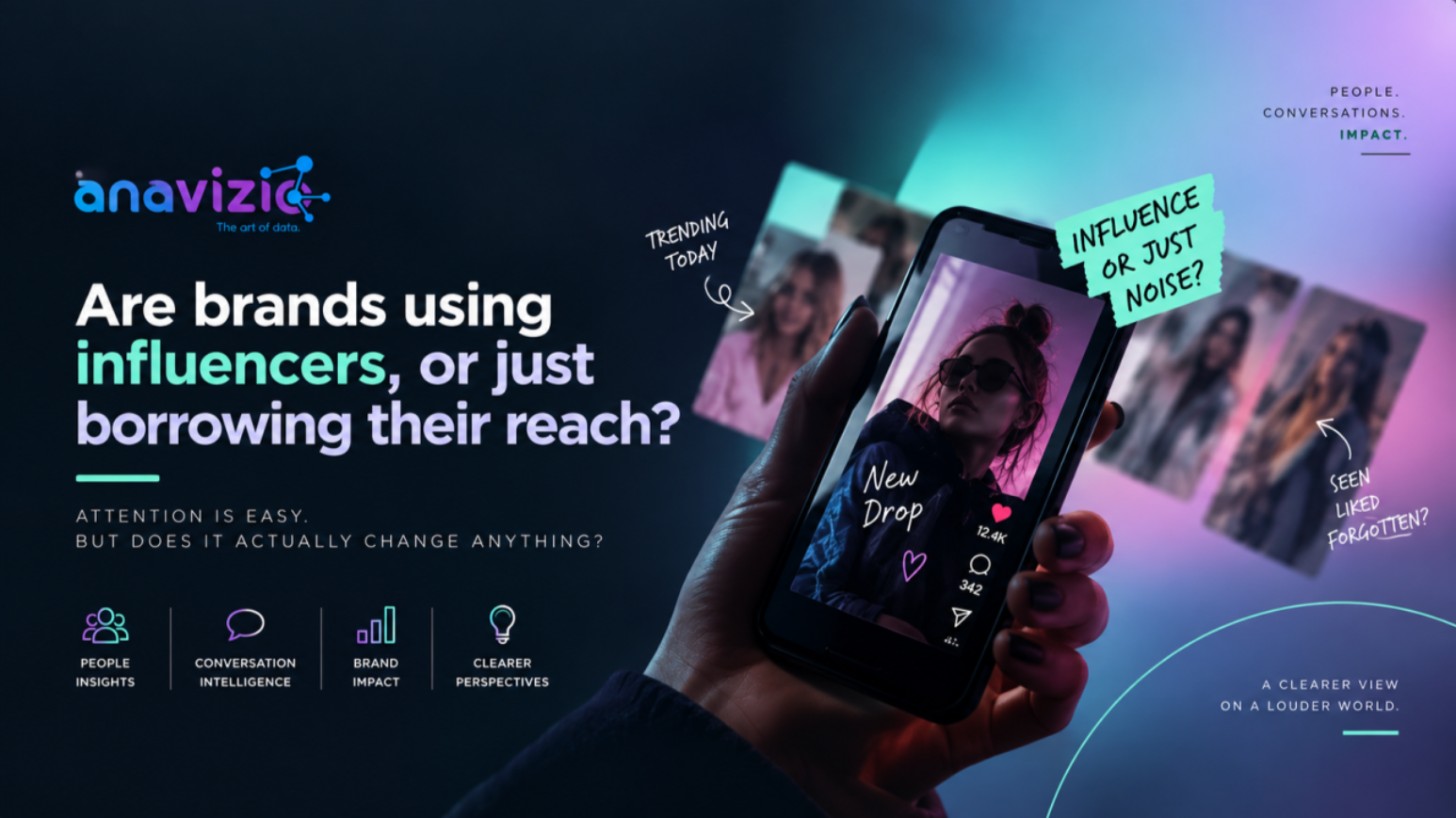
Are Brands Using Influencers, or Just Borrowing Their Reach?
It’s something we’ve been thinking about a lot lately. Influencer selection has changed quite dramatically over the last few years. There was a time when the conversation was largely about reach. Then came engagement rates. Then authenticity. Then micro influencers. Then creators. Then niche communities.
And now, sometimes, it feels like we’ve circled right back to: Who is trending right now? Who can get us the most eyeballs? Which isn’t necessarily a bad thing. Attention matters. But what happens after we get it?
We live in an interesting era of internet fame. Someone can be “cancelled” on Monday, trending again a few weeks later, and back on everyone’s feeds before we’ve even remembered why we stopped following them in the first place. People forget. Audiences move on. Content consumption continues. But consumption and influence are two very different things. Just because someone watched a creator’s Reel, laughed at their content, commented on a giveaway, or followed them because they wanted to win something doesn’t necessarily mean that creator influenced how they feel about the brand. And it definitely doesn’t mean they’re going to buy it.
That’s the part we think brands need to question more. What are we actually asking an influencer to do for the brand? Is it awareness? Credibility? Consideration? Introducing the brand to a new community? Changing a perception? Creating an experience people want to be part of? Or ultimately driving purchase?
Because the answer should influence who you choose, what you ask them to create and, most importantly, how you measure whether it worked. A campaign generating 500,000 engagements looks fantastic on a report. But if 400,000 of those came from a contest asking people to tag three friends and drop an emoji to win an iPhone, what exactly did we build for the brand? Maybe awareness. Maybe reach. Definitely a very impressive engagement number.
But did anyone remember the message? Did perceptions shift? Did people talk about the product? Did the creator add something to the brand story? Did the campaign create an association that lasted longer than the contest itself? And would that audience choose the brand tomorrow?
These are harder questions to answer. But they’re becoming much more important than simply asking, “How many people engaged?” Because influencers can be incredibly powerful voices for brands when there is a reason for that voice to be there.
From what we see when analysing campaigns and online conversations, some of the strongest creator partnerships give people something to connect with. A story. An experience. A cultural moment. A useful demonstration. A genuine opinion.
Something that makes the brand feel relevant within the creator’s world rather than temporarily inserted into it. That is where influence starts becoming interesting. Not when someone simply sees your logo. But when the creator helps your brand mean something to their audience.
So maybe the question before the next influencer campaign shouldn’t just be:
“Who has the biggest reach?”
Or even:
“Who has the best engagement rate?”
Maybe it should be:
“What do we want this person to make people think, feel or do differently about our brand?”
And if we can’t answer that before selecting the influencer, perhaps we’re not really planning for influence. We’re planning for noise. And noise disappears pretty quickly.
At Anavizio, we believe there is a much bigger conversation to be had around measuring influencer impact beyond headline numbers. Not just who generated engagement, but what that engagement actually meant for the brand. Because reach tells you how far something travelled. Influence should tell you whether it changed anything.
This analysis was first shared on our LinkedIn page.