UAE petrol prices dropped in November. So why aren’t consumers celebrating?
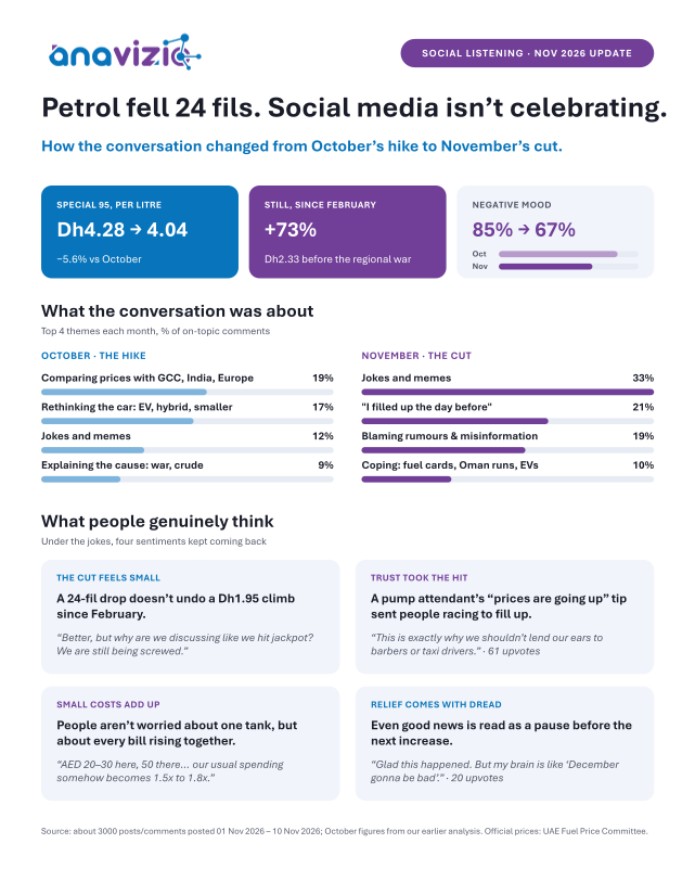
After October’s sharp increase, Special 95 petrol prices fell by 24 fils in November, from AED 4.28 to AED 4.04 per litre. You’d expect some relief. But social media tells a different story.
Our latest social listening analysis found that while negative sentiment declined from 85% in October to 67% in November, frustration remains. And the conversations have shifted.
Consumers aren’t reacting to the 24-fil reduction in isolation. They’re reacting to the cumulative cost of living. With petrol still 73% more expensive than in February, the reduction feels relatively small. And even positive news is being met with scepticism about what December might bring.
This is where social listening adds perspective. A price reduction doesn’t automatically translate into positive consumer sentiment. Understanding the context behind the reaction is just as important as tracking the reaction itself.
At Anavizio, we look beyond sentiment percentages to understand the conversations, behaviours and concerns shaping consumer perceptions. Because the real insight isn’t just what people are saying. It’s why they’re saying it.
This analysis was first shared on our LinkedIn page.
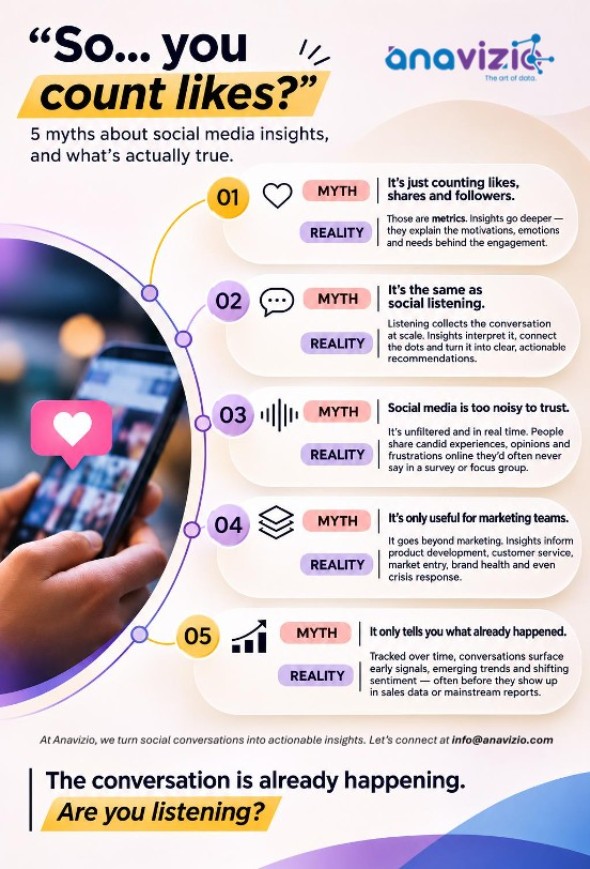
“So… you count likes?”
It’s the question we hear most when we tell people what we do. And honestly, we get it. Social media insights are still widely misunderstood.
So we’ve rounded up the five myths we hear most often, and what’s actually true.
The short version: likes and followers tell you what happened. Insights tell you why, and what to do next.
Which of these myths have you come across? Or is there one we missed? Let us know.
This analysis was first shared on our LinkedIn page.
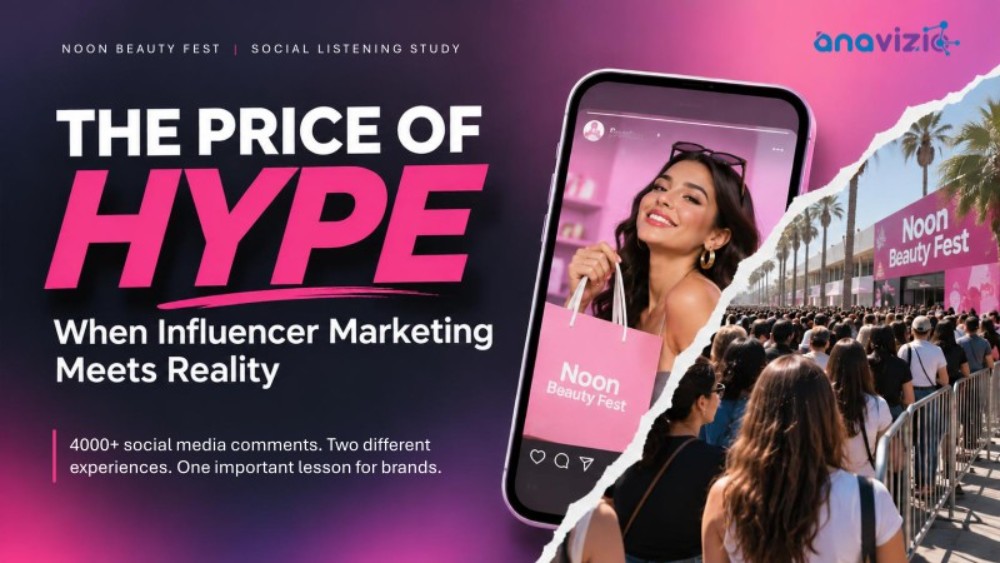
Influencer marketing delivered the hype. But did it deliver the experience?
Noon Beauty Fest attracted the crowds, but the online conversation tells a different story. We analysed over 4,000 social media comments, uncovering a growing debate around influencer responsibility, consumer expectations and event management.
The big question: if a campaign successfully drives footfall but leaves consumers disappointed, can we really call it a success?
Our latest social listening study explores what happened, who consumers held accountable and the lessons for brands and creators. Because reach without experience is a reputation risk.
This analysis was first shared on our LinkedIn page.
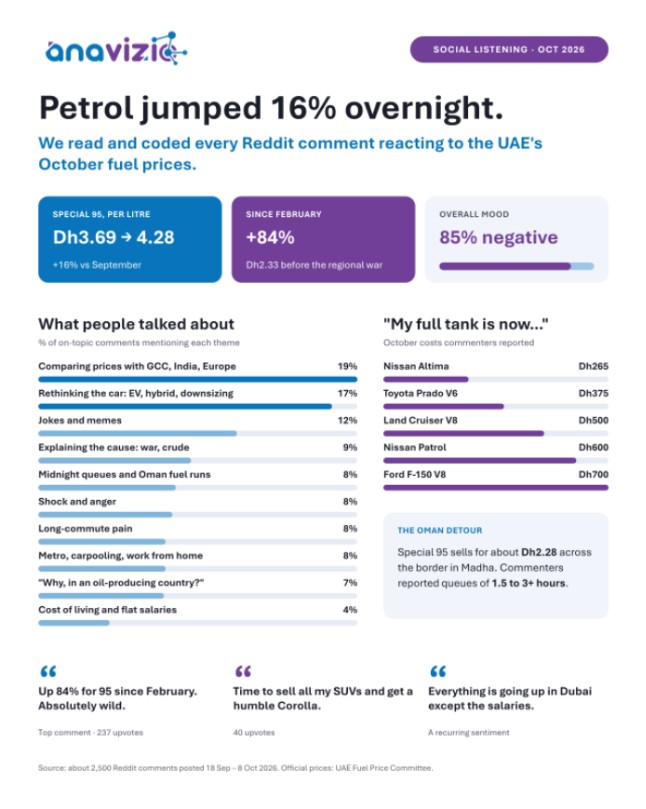
Petrol in the UAE jumped 16% overnight on October 1, so we listened to what people were saying on Reddit.
85% of comments that took a side were negative. But people didn’t just vent. They compared prices with Oman and the rest of the GCC, rethought their cars, and joked their way through it. Memes outnumbered angry comments.
When prices bite, customers compare, adapt and laugh. Each reaction tells you something about what they’ll do next.
This analysis was first shared on our LinkedIn page.
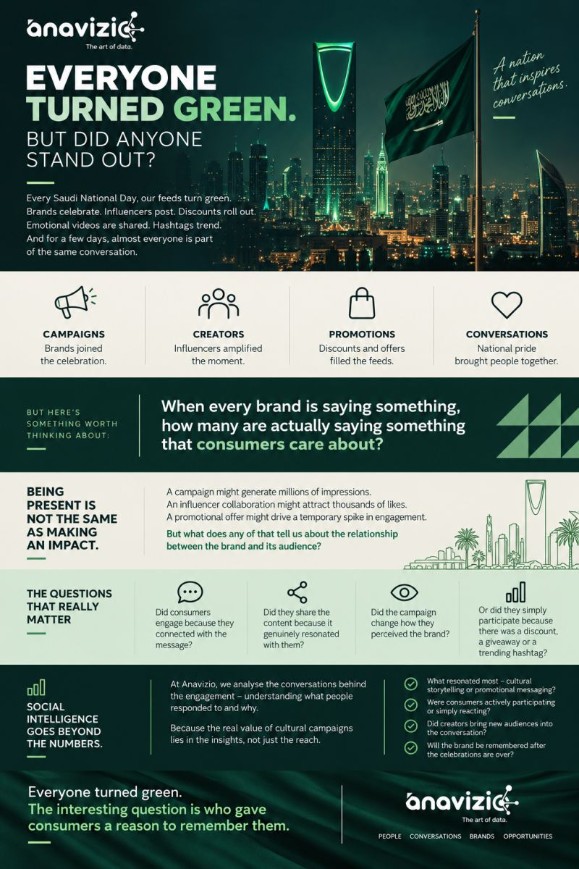
Saudi National Day brings brands, creators and consumers into one shared conversation. But when everyone is participating in the same cultural moment, being present isn’t necessarily the same as making an impact.
Beyond reach, likes and engagement, the more interesting question is: what actually resonated, and what will consumers remember once the celebrations are over?
At Anavizio, we believe that’s where social intelligence becomes valuable. Not just measuring the buzz, but understanding what sits behind it.
Because joining the conversation is easy. Giving people a reason to remember your brand is harder.
This analysis was first shared on our LinkedIn page.
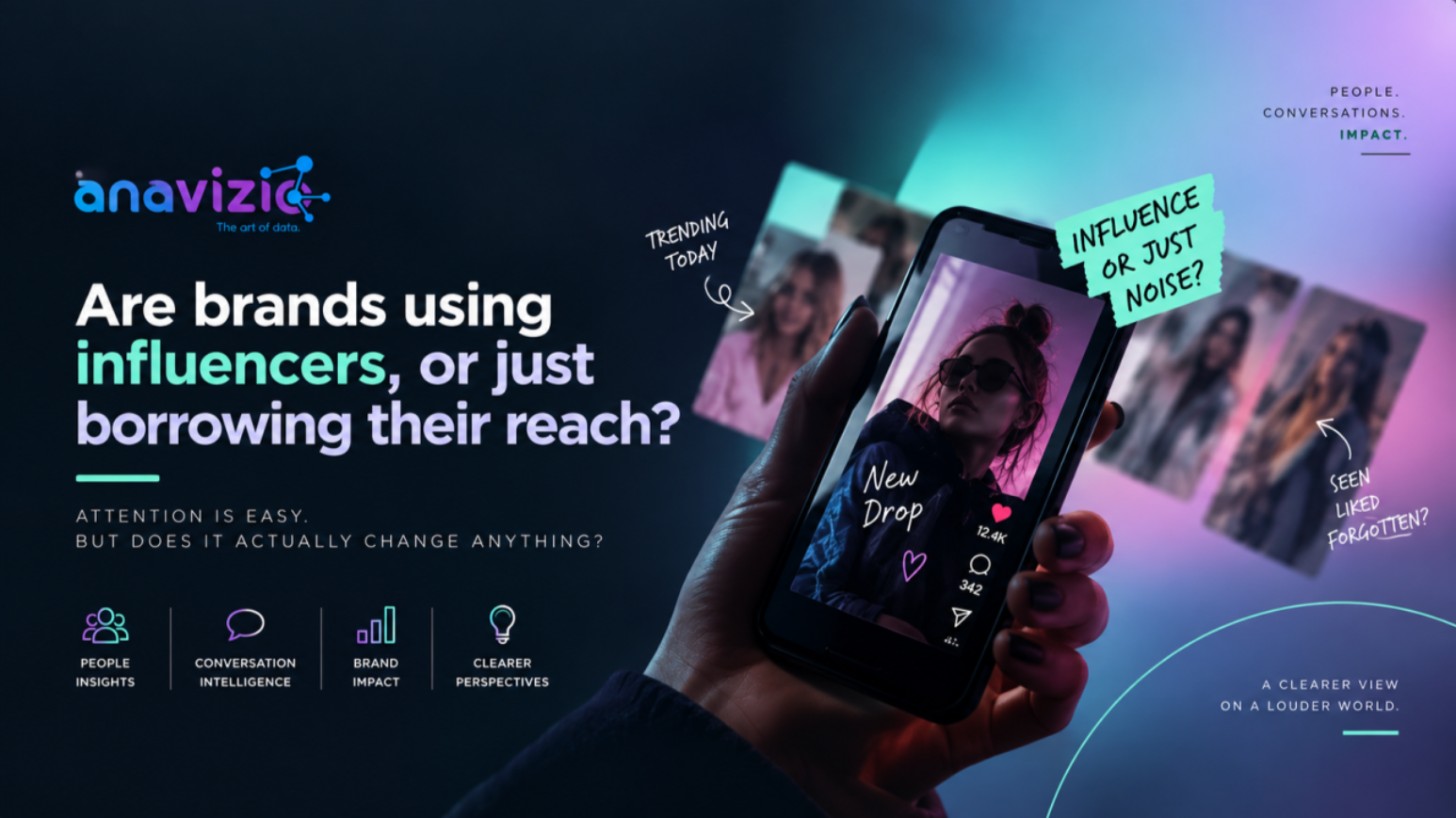
It’s something we’ve been thinking about a lot lately. Influencer selection has changed quite dramatically over the last few years. There was a time when the conversation was largely about reach. Then came engagement rates. Then authenticity. Then micro influencers. Then creators. Then niche communities.
And now, sometimes, it feels like we’ve circled right back to: Who is trending right now? Who can get us the most eyeballs? Which isn’t necessarily a bad thing. Attention matters. But what happens after we get it?
We live in an interesting era of internet fame. Someone can be “cancelled” on Monday, trending again a few weeks later, and back on everyone’s feeds before we’ve even remembered why we stopped following them in the first place. People forget. Audiences move on. Content consumption continues. But consumption and influence are two very different things. Just because someone watched a creator’s Reel, laughed at their content, commented on a giveaway, or followed them because they wanted to win something doesn’t necessarily mean that creator influenced how they feel about the brand. And it definitely doesn’t mean they’re going to buy it.
That’s the part we think brands need to question more. What are we actually asking an influencer to do for the brand? Is it awareness? Credibility? Consideration? Introducing the brand to a new community? Changing a perception? Creating an experience people want to be part of? Or ultimately driving purchase?
Because the answer should influence who you choose, what you ask them to create and, most importantly, how you measure whether it worked. A campaign generating 500,000 engagements looks fantastic on a report. But if 400,000 of those came from a contest asking people to tag three friends and drop an emoji to win an iPhone, what exactly did we build for the brand? Maybe awareness. Maybe reach. Definitely a very impressive engagement number.
But did anyone remember the message? Did perceptions shift? Did people talk about the product? Did the creator add something to the brand story? Did the campaign create an association that lasted longer than the contest itself? And would that audience choose the brand tomorrow?
These are harder questions to answer. But they’re becoming much more important than simply asking, “How many people engaged?” Because influencers can be incredibly powerful voices for brands when there is a reason for that voice to be there.
From what we see when analysing campaigns and online conversations, some of the strongest creator partnerships give people something to connect with. A story. An experience. A cultural moment. A useful demonstration. A genuine opinion.
Something that makes the brand feel relevant within the creator’s world rather than temporarily inserted into it. That is where influence starts becoming interesting. Not when someone simply sees your logo. But when the creator helps your brand mean something to their audience.
So maybe the question before the next influencer campaign shouldn’t just be:
“Who has the biggest reach?”
Or even:
“Who has the best engagement rate?”
Maybe it should be:
“What do we want this person to make people think, feel or do differently about our brand?”
And if we can’t answer that before selecting the influencer, perhaps we’re not really planning for influence. We’re planning for noise. And noise disappears pretty quickly.
At Anavizio, we believe there is a much bigger conversation to be had around measuring influencer impact beyond headline numbers. Not just who generated engagement, but what that engagement actually meant for the brand. Because reach tells you how far something travelled. Influence should tell you whether it changed anything.
This analysis was first shared on our LinkedIn page.
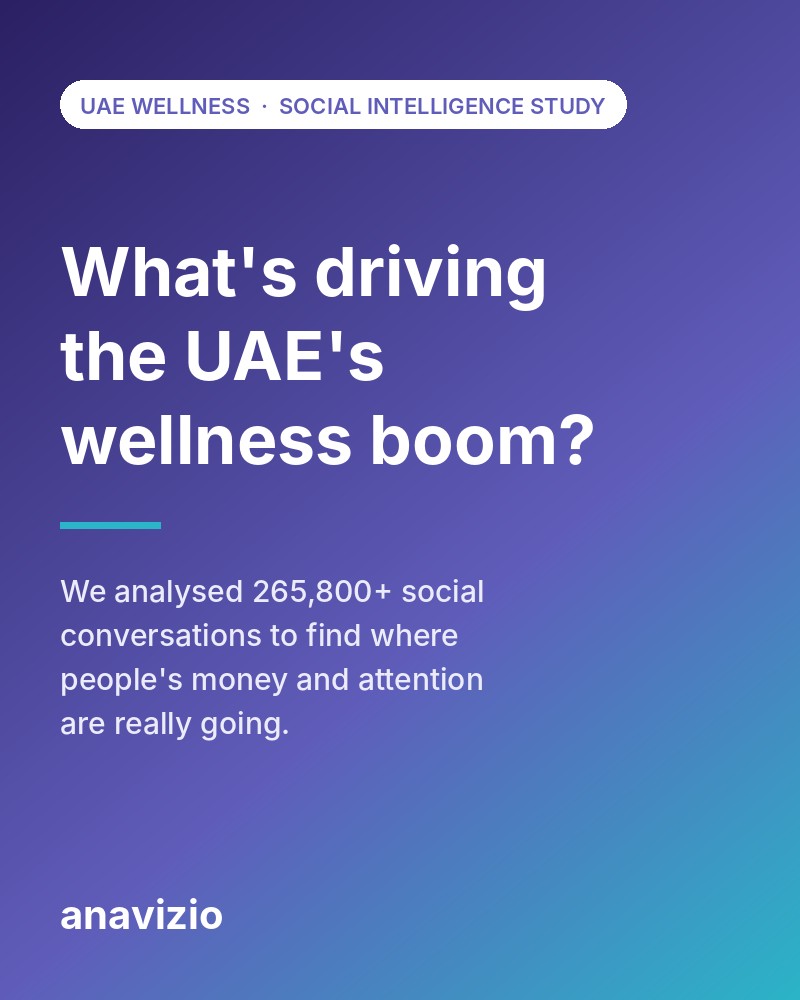
We spent the last few weeks digging through 265,800+ social conversations to figure out what’s actually behind the UAE’s wellness boom.
Not just the hashtags, but where people’s money and attention are really going. And the shift is real: wellness has moved from gym memberships and spa days towards wearables, longevity, advanced injectables and data-driven treatments.
Want the full report? Get in touch with us at info@anavizio.com.
This analysis was first shared on our LinkedIn page.
Is your brand speaking to the GCC audience of 2020 or 2025?
The way people behave online in this region has fundamentally shifted, and the brands winning right now are the ones who’ve noticed. They’re shaping culture, and many brands are still playing by rules that no longer apply.
We put together four insights from our latest research on how GCC audiences are engaging today.
This analysis was first shared on our LinkedIn page.
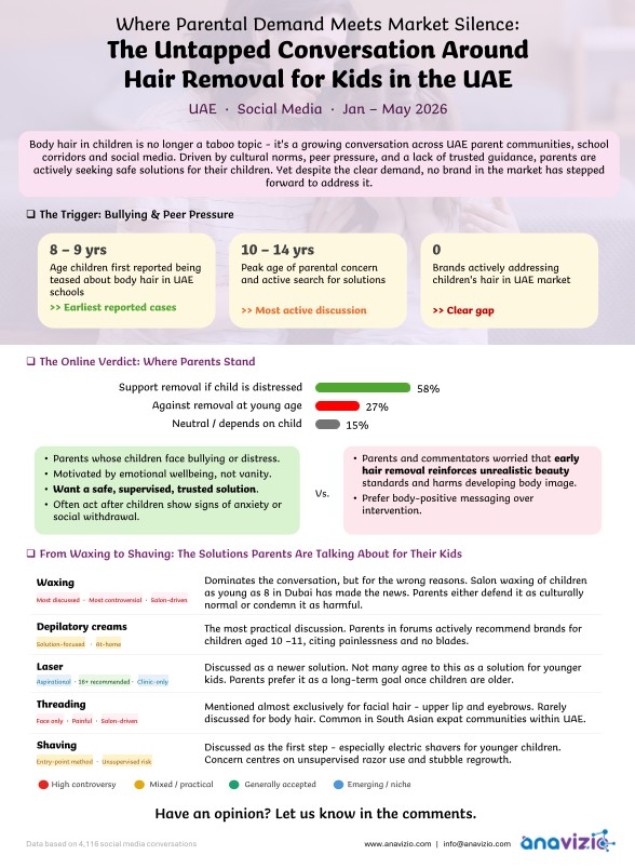
UAE parents are actively searching for safe hair removal solutions for their kids. Yet not a single brand has stepped up to meet that demand.
We analysed 4,116 social media conversations to understand what’s driving this conversation, and what it means for the market.
The trigger isn’t vanity. It’s bullying. Children as young as 8 are being teased about body hair in UAE schools, and parents are turning to forums, salons and DIY methods because there’s nowhere else to go.
The gap is clear. Is this a space brands should be addressing?
This analysis was first shared on our LinkedIn page.
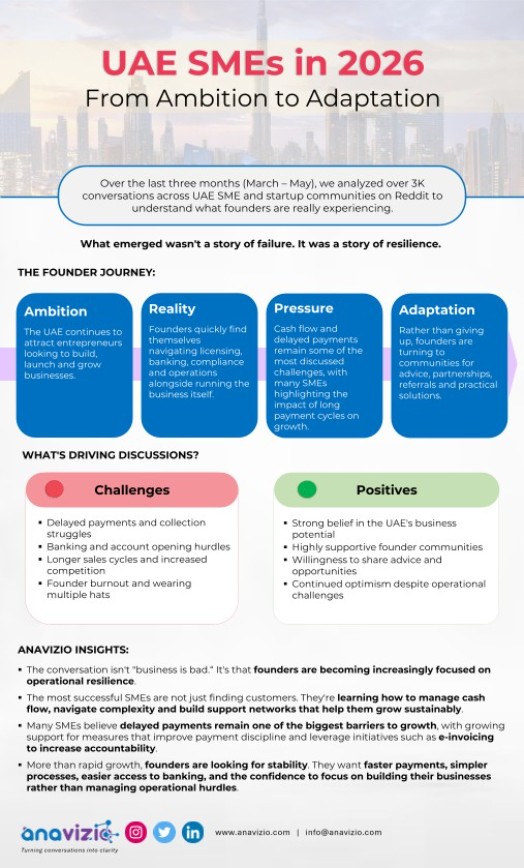
What are UAE founders really talking about in 2026?
We dug into 3,000+ conversations across UAE SME and startup communities to find out, and the picture is nuanced. Yes, cash flow and delayed payments are a real pain. Yes, banking and licensing remain complex.
But the dominant theme? Resilience over retreat. Founders are leaning into community, seeking practical solutions, and pushing for smarter systems like e-invoicing to improve payment discipline.
This is what adaptation looks like.
This analysis was first shared on our LinkedIn page.